
1 month ago
(E)
Zohran Mamdani enters New York City Hall with a global story behind him. His path to becoming the city’s youngest mayor and first Muslim mayor in November 2025 includes formative years in South Africa. Those years shaped how he sees power, justice, and community. You see those influences in his policies today.
Mamdani lived in Cape Town from 1996 to 1999. He was between five and seven years old. His father, academic Mahmood Mamdani, worked at the University of Cape Town during that period. The family settled in a city still adjusting to life after apartheid. Mamdani often references this time when speaking about inequality and social responsibility. Exposure to diverse communities at a young age influenced how he views public service.
Born in Uganda to Ugandan Indian parents, Mamdani grew up across continents. His childhood moved between Africa and the United States. His parents were active in academic and social movements. You can trace his political values to those early environments. Education, activism, and public debate were part of daily life.
Those experiences fed into a clear political platform. Mamdani identifies as a democratic socialist. His campaign focused on practical issues affecting city residents. You hear consistent themes across his speeches and policy proposals.
Key priorities from his campaign included:
Immigrant rights and protections for undocumented workers.
Stronger labor rights and support for unions.
Housing affordability through public investment.
Public safety reforms centered on community based solutions.
Mamdani won the mayoral election in November 2025. He took office in January 2026. At age 33 he became the youngest mayor New York City has seen in more than a century. Voter turnout among young and immigrant communities increased during the election. Campaign data showed strong support in neighborhoods with high immigrant populations.
His victory resonated beyond the United States. South African activists and political organizations reacted quickly. The Economic Freedom Fighters publicly welcomed the result. Supporters framed the win as proof of global progressive momentum.
For you as a reader, Mamdani’s story shows how early life experiences shape leadership. His years in Cape Town and Uganda continue to influence how he governs New York City. Those roots inform decisions on inclusion, equity, and community safety.
Mamdani lived in Cape Town from 1996 to 1999. He was between five and seven years old. His father, academic Mahmood Mamdani, worked at the University of Cape Town during that period. The family settled in a city still adjusting to life after apartheid. Mamdani often references this time when speaking about inequality and social responsibility. Exposure to diverse communities at a young age influenced how he views public service.
Born in Uganda to Ugandan Indian parents, Mamdani grew up across continents. His childhood moved between Africa and the United States. His parents were active in academic and social movements. You can trace his political values to those early environments. Education, activism, and public debate were part of daily life.
Those experiences fed into a clear political platform. Mamdani identifies as a democratic socialist. His campaign focused on practical issues affecting city residents. You hear consistent themes across his speeches and policy proposals.
Key priorities from his campaign included:
Immigrant rights and protections for undocumented workers.
Stronger labor rights and support for unions.
Housing affordability through public investment.
Public safety reforms centered on community based solutions.
Mamdani won the mayoral election in November 2025. He took office in January 2026. At age 33 he became the youngest mayor New York City has seen in more than a century. Voter turnout among young and immigrant communities increased during the election. Campaign data showed strong support in neighborhoods with high immigrant populations.
His victory resonated beyond the United States. South African activists and political organizations reacted quickly. The Economic Freedom Fighters publicly welcomed the result. Supporters framed the win as proof of global progressive momentum.
For you as a reader, Mamdani’s story shows how early life experiences shape leadership. His years in Cape Town and Uganda continue to influence how he governs New York City. Those roots inform decisions on inclusion, equity, and community safety.
Only followers of this user (h_zulu) can see their posts
Only followers of this user (h_zulu) can see their posts
Only followers of this user (h_zulu) can see their posts
2 months ago
Here are the top 7 news headlines in South Africa today🚨:-
1. Makate legal battle over Vodacom settlement,
2. Ramaphosa challenges rivals to “name the date”,
3. Record bond yield drop after credit upgrade,
4. Suspicious arrival of 150 Palestinian refugees,...many more!!!
1. Makate legal battle over Vodacom settlement,
2. Ramaphosa challenges rivals to “name the date”,
3. Record bond yield drop after credit upgrade,
4. Suspicious arrival of 150 Palestinian refugees,...many more!!!

2 months ago
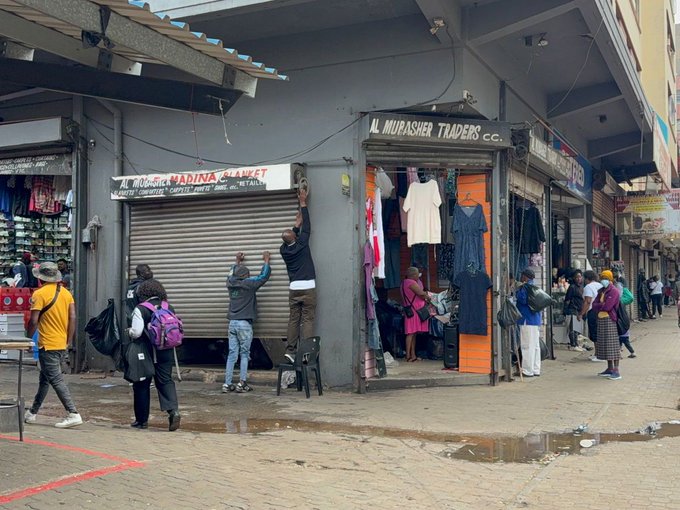
The Security Services of SA 🇿🇦 is trying to ring an alarm to the people of South Africa,
They have called the current style of governance unpatriotic,
Three Generals from security forces have all expressed dissatisfaction about Cyril's government
Coup de tat may be coming!
They have called the current style of governance unpatriotic,
Three Generals from security forces have all expressed dissatisfaction about Cyril's government
Coup de tat may be coming!

Only followers of this user (h_zulu) can see their posts

2 months ago


Only followers of this user (h_zulu) can see their posts


5 months ago
Self-distribution lets musicians release music directly to digital platforms without a label. Here are the main pros and cons:
Pros
Full control over your music, release dates, and pricing.
Keep most of the revenue instead of splitting with a label.
Direct connection with fans through platforms like Spotify, Apple Music, YouTube, and Bandcamp.
Flexibility to experiment with styles, singles, or albums without external pressure.
Access to data and ******* ytics to understand your audience.
Low entry cost with digital distributors like DistroKid, TuneCore, or CD Baby.
Cons
You handle marketing, promotion, and networking yourself.
No upfront funding from a label for recording, videos, or tours.
Harder to get playlist placements and media coverage without industry connections.
Time-consuming to manage both music creation and business tasks.
Income can be unpredictable and low without strong promotion
Pros
Full control over your music, release dates, and pricing.
Keep most of the revenue instead of splitting with a label.
Direct connection with fans through platforms like Spotify, Apple Music, YouTube, and Bandcamp.
Flexibility to experiment with styles, singles, or albums without external pressure.
Access to data and ******* ytics to understand your audience.
Low entry cost with digital distributors like DistroKid, TuneCore, or CD Baby.
Cons
You handle marketing, promotion, and networking yourself.
No upfront funding from a label for recording, videos, or tours.
Harder to get playlist placements and media coverage without industry connections.
Time-consuming to manage both music creation and business tasks.
Income can be unpredictable and low without strong promotion


Only followers of this user (h_zulu) can see their posts
Only followers of this user (h_zulu) can see their posts
Only followers of this user (h_zulu) can see their posts
Only followers of this user (h_zulu) can see their posts